
Each year, over a thousand volunteers power UK marathons, transforming race day from logistical chaos into seamless celebration. Without these dedicated individuals, iconic events like London and Brighton simply couldn’t happen. This article reveals the diverse volunteer roles essential to marathon success, explores their profound community impact, and debunks common myths preventing people from joining. You’ll learn exactly how volunteers support runners, drive charity fundraising, and gain personal rewards whilst discovering accessible pathways to get involved in 2026.
Table of Contents
- Introduction To Marathon Volunteering In The UK
- Core Roles And Responsibilities Of Marathon Volunteers
- Community And Charitable Impact Of Volunteer Engagement
- Volunteer Benefits, Incentives, And Support Systems
- Common Misconceptions About Marathon Volunteering
- Practical Guide: How To Volunteer For A Marathon
- Conclusion: The Transformative Power Of Marathon Volunteers
- Join Marathon Volunteering In Milton Keynes 2026
- Frequently Asked Questions
Key takeaways
| Point | Details |
|---|---|
| Volunteer diversity | Roles span logistics, runner support, and community engagement, requiring enthusiasm rather than expertise. |
| Charity impact | Marathon volunteers underpin millions in fundraising, with London 2025 raising £87.3 million through volunteer-supported efforts. |
| Personal rewards | Volunteering offers training, social connections, free race entries, and skill development opportunities. |
| Accessibility myths | Most roles involve short shifts without specialist knowledge, making participation achievable for anyone. |
| Easy participation | Official marathon portals provide straightforward registration with pre-event briefings and ongoing support. |
Introduction to marathon volunteering in the UK
Marathon volunteering encompasses the broad spectrum of unpaid support roles that enable race day operations across the United Kingdom. These positions range from course marshalling and water station management to cheerleading and medal distribution. The scope has expanded dramatically as participation in top UK marathons and half marathons continues growing, creating unprecedented demand for organised volunteer networks.
Britain’s marathon landscape has witnessed remarkable growth over the past decade. Major events now attract tens of thousands of runners, each requiring coordinated support throughout their journey. The scale becomes evident when examining flagship races. Brighton Marathon volunteering opportunities reveal how some UK marathons rely on over a thousand volunteers working behind the scenes to create an unforgettable race day experience. Manchester Marathon similarly mobilises hundreds of volunteers across multiple sites.
Typical volunteer contributions include:
- Course marshalling to guide runners and manage intersections
- Staffing water stations and fuel stops at regular intervals
- Operating baggage facilities and registration desks
- Providing first aid assistance and medical support
- Creating vibrant cheer points to boost runner morale
- Distributing medals and managing finish line logistics
- Supporting charity stands and community engagement areas
This volunteer infrastructure represents the invisible foundation supporting every successful marathon. Without coordinated volunteer efforts, race organisers couldn’t deliver the safety, encouragement, and logistical precision runners expect. Understanding this essential framework helps prospective volunteers recognise their potential contribution’s genuine significance.
Core roles and responsibilities of marathon volunteers
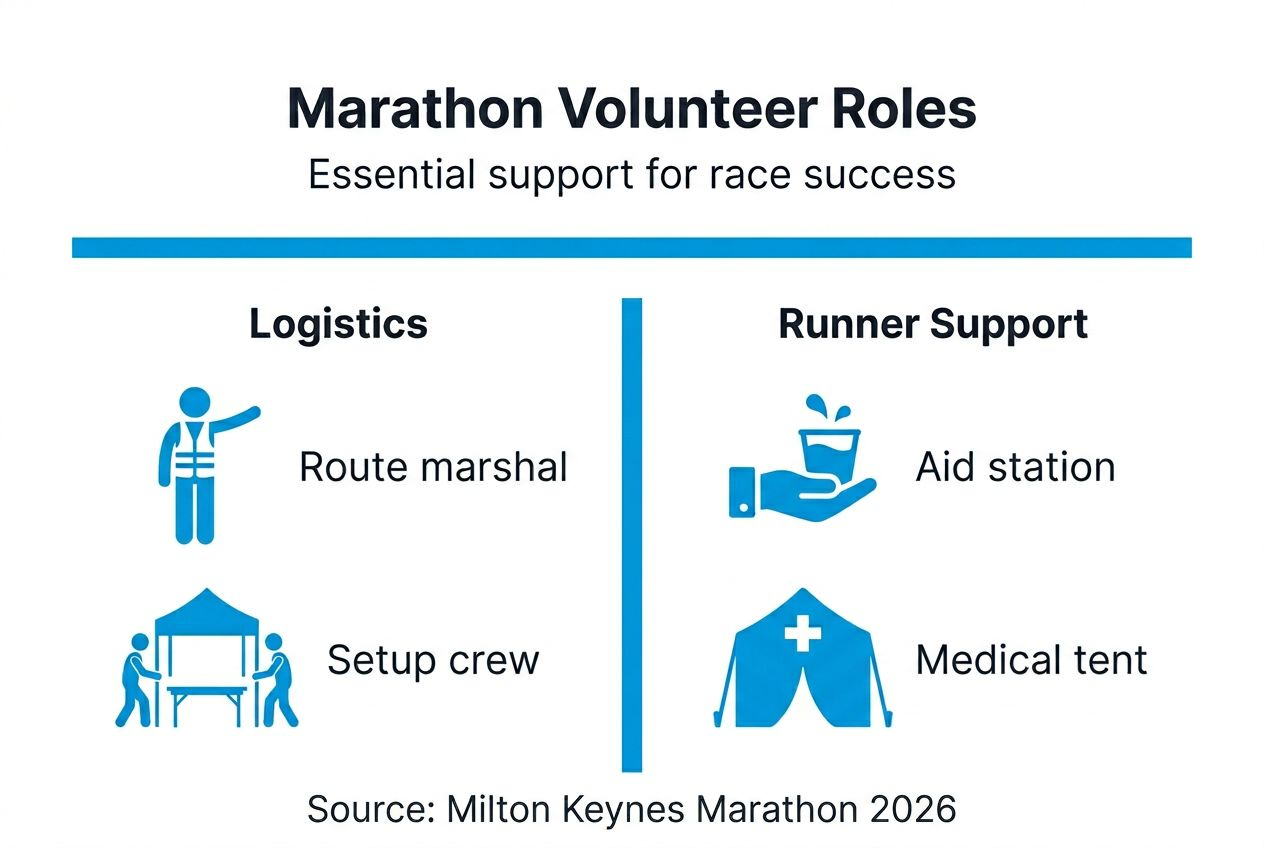
Marathon volunteer assignments fall into three primary categories, each vital to seamless event execution. Logistical roles form the operational backbone, ensuring runners navigate courses safely and efficiently. Course marshals position themselves at key junctions, directing participants whilst managing traffic flow. Water station volunteers prepare and distribute hydration at designated intervals, often serving thousands of cups during peak periods. Baggage handlers manage runner belongings, implementing systems allowing quick retrieval after crossing the finish line.
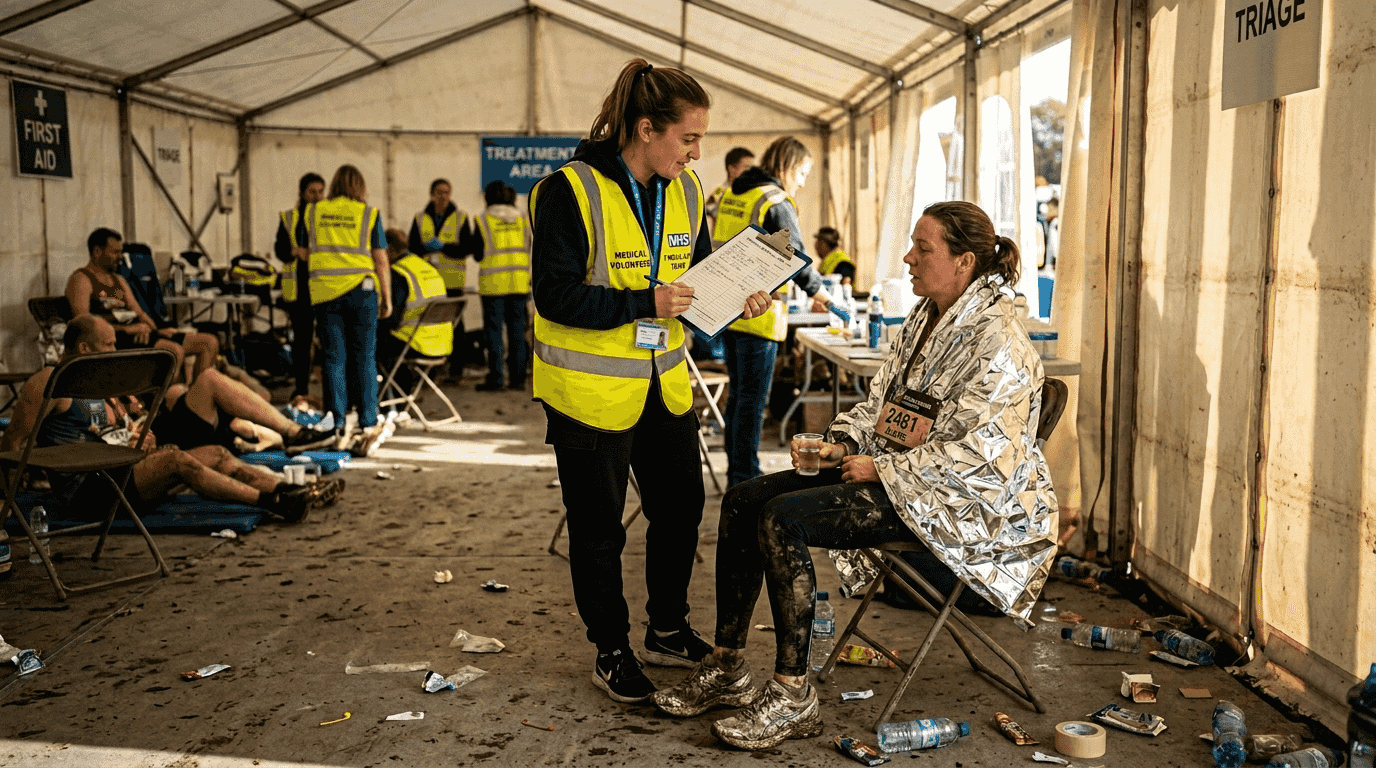
Runner support roles directly enhance participant experience and wellbeing. Volunteer roles at the London Marathon include cheerleading at designated points, which boosts runner motivation and race atmosphere. Medal distributors create memorable finish line moments, often providing congratulations alongside physical awards. First aid volunteers offer crucial medical assistance, monitoring runners for distress signals and providing immediate intervention when needed. These positions demand attentiveness and empathy rather than technical qualifications.
Community engagement volunteers connect marathons with broader social impact. They staff charity stands, facilitate donation collection, and explain cause connections to spectators. Event village volunteers manage entertainment zones, creating festive atmospheres that extend beyond the race itself. The European Athletics Championships 2026 in Birmingham rely heavily on volunteers aged 18+ for marathon support roles requiring team spirit and positive attitude.
| Role Category | Primary Tasks | Key Skills |
|---|---|---|
| Logistics | Marshalling, water stations, baggage | Organisation, reliability |
| Runner Support | Cheering, medals, first aid | Enthusiasm, empathy |
| Community | Charity stands, event village | Communication, friendliness |
Effective volunteers share common characteristics regardless of specific assignment. Enthusiasm proves more valuable than experience, as positive energy directly impacts runner morale and spectator engagement. Reliability ensures organisers can depend on volunteer commitments, preventing last-minute coverage gaps. Clear communication helps volunteers coordinate with team members and respond to participant queries confidently.
The milton keynes marathon event crew exemplifies structured volunteer programmes, providing clear role descriptions and expectations. Similarly, the course marshal role demonstrates how specific assignments balance responsibility with accessibility, requiring dedication without demanding prior expertise.
Pro Tip: Select volunteer roles matching your energy levels and interests to maximise enjoyment and effectiveness. Early morning people excel at registration desks, whilst high-energy individuals thrive at cheer points.
Community and charitable impact of volunteer engagement
Marathon volunteers serve as force multipliers for charitable fundraising, enabling donation collection and awareness campaigns that generate substantial financial impact. The 2025 London Marathon raised a record £87.3 million for charity, substantially driven by volunteer support. Volunteers staff charity stands, explain cause connections to spectators, and facilitate contactless donations throughout event grounds. This infrastructure transforms individual runner fundraising into coordinated community philanthropy.
Beyond monetary contributions, marathon community fundraising impact extends into strengthened social cohesion and local support networks. Volunteers often form lasting friendships through shared event experiences, building relationships that extend beyond race day. Community organisations use marathon volunteering as team-building opportunities, reinforcing internal bonds whilst contributing to public events. These social connections create resilient neighbourhood networks that activate during crises and celebrations alike.
“The 2025 London Marathon’s £87.3 million charity total demonstrates how volunteer coordination transforms individual generosity into collective community impact, with volunteers enabling seamless donation collection and cause promotion throughout race day.”
Marathon volunteering also drives health promotion initiatives and physical activity participation. Volunteers witness athletic achievement firsthand, often inspiring their own fitness journeys. Many transition from volunteering to participating in future races, creating positive feedback loops that expand active living across communities. Event organisers leverage this phenomenon, designing volunteer programmes that educate participants about training resources and beginner-friendly race categories.
Community engagement in marathons reveals how volunteer recruitment strengthens civic participation beyond athletics. Local businesses contribute volunteers as corporate social responsibility initiatives, deepening their community investment. Schools organise student volunteer groups, teaching civic engagement through practical service. Faith communities mobilise members to support charitable causes aligned with their values, expressing spiritual commitments through tangible action.
Volunteer-led initiatives generate ripple effects throughout local economies and social infrastructure. Hospitality businesses benefit from marathon-related tourism, whilst volunteer networks facilitate knowledge transfer about community resources and support services. This interconnected impact demonstrates how marathon volunteering transcends simple event support, becoming catalyst for broader community development and social capital accumulation.
Volunteer benefits, incentives, and support systems
UK marathon organisers provide comprehensive support systems ensuring volunteers feel prepared and valued throughout their participation. Volunteers receive essential briefings and support before and during events to ensure safety and positive interactions, aiding retention and event success. Pre-event briefings typically occur one to two weeks before race day, covering specific role expectations, safety protocols, and communication procedures. Online resources supplement in-person training, providing volunteers with reference materials accessible throughout their preparation.
During events, experienced volunteer coordinators circulate among teams, addressing questions and resolving challenges as they emerge. Radio communication systems connect volunteers with central coordination, enabling rapid response to unexpected situations. Break schedules ensure volunteers maintain energy levels, with refreshments provided throughout shifts. This infrastructure creates supportive environments where volunteers feel confident executing their responsibilities.
Tangible incentives recognise volunteer contributions and encourage continued participation. Common rewards include:
- Free entry to future races, allowing volunteers to experience events as participants
- Official event merchandise such as t-shirts and medals
- Certificates recognising volunteer hours and contributions
- Group donations to charities chosen by volunteer teams
- Access to exclusive volunteer appreciation events
These incentives acknowledge that volunteers invest valuable time and energy into marathon success. Marathon event awards and volunteer recognition programmes celebrate outstanding contributions, creating aspirational goals that motivate sustained engagement.
Intangible benefits often prove more significant than material rewards. Volunteers consistently report personal growth through skill development, particularly in communication, organisation, and problem-solving. Many form meaningful friendships with fellow volunteers, creating social networks that extend beyond marathon contexts. The sense of community contribution provides psychological satisfaction, fulfilling human needs for purpose and belonging.
Pro Tip: Leverage volunteer opportunities to build transferable skills and professional networks. Highlight volunteer coordination experience on CVs, emphasising leadership, teamwork, and event management capabilities developed through marathon participation.
Volunteering facilitates intergenerational connection, bringing together participants across age ranges united by common purpose. Older volunteers mentor younger participants, sharing wisdom whilst staying engaged with community activities. Younger volunteers inject energy and technological expertise, modernising operations whilst learning from experienced colleagues. This exchange enriches both individual volunteers and broader marathon culture.
Common misconceptions about marathon volunteering
Prospective volunteers often hesitate due to misconceptions about required expertise and time commitments. The belief that volunteering demands specialist knowledge prevents many interested individuals from exploring opportunities. Reality contradicts this assumption. Most marathon volunteer roles do not require expertise and can involve short shifts, making them accessible to a wide audience. Course marshalling requires only clear communication and reliable presence. Water station volunteers need enthusiasm rather than technical training.
Another prevalent myth suggests volunteering involves exhausting all-day commitments unsuitable for busy schedules. Actual volunteer shifts typically span three to five hours, allowing participation without overwhelming time investment. Many roles offer flexible scheduling, accommodating volunteers who can only contribute during specific timeframes. Race organisers deliberately structure shifts to prevent volunteer fatigue, recognising that energised volunteers deliver better participant experiences.
Physical demands represent another barrier discouraging potential volunteers. Some assume all roles require extensive standing, heavy lifting, or strenuous activity. Whilst certain positions involve physical exertion, many accommodate varying ability levels. Registration desks suit volunteers preferring seated positions. Cheer points welcome participants using mobility aids. Event coordinators actively seek diverse volunteer pools, designing inclusive roles matching different capabilities and preferences.
Key misconceptions debunked:
- Myth: Volunteering requires medical training or athletic expertise
- Reality: Most roles need only enthusiasm and willingness to help
- Myth: Volunteers must commit to entire event days
- Reality: Shifts often last three to five hours with flexible scheduling
- Myth: All positions demand extensive standing and physical activity
- Reality: Many roles accommodate seated work and varied ability levels
- Myth: Volunteering provides no personal benefit
- Reality: Volunteers gain skills, friendships, and community connection
The misconception that volunteering lacks personal benefit overlooks substantial individual rewards. Beyond tangible incentives, volunteers develop transferable skills applicable across professional and personal contexts. They build social capital through expanded networks and meaningful relationships. The psychological satisfaction from community contribution enhances mental wellbeing and life satisfaction.
Understanding these realities empowers hesitant individuals to explore milton keynes marathon volunteer opportunities without unfounded concerns preventing their participation. Marathon volunteering genuinely welcomes anyone willing to contribute positively, regardless of prior experience or perceived limitations.
Practical guide: how to volunteer for a marathon
Securing a marathon volunteer position follows straightforward steps accessible to anyone interested in contributing. Begin by identifying upcoming events through official marathon websites and community volunteering platforms. Most major UK marathons maintain dedicated volunteer recruitment pages with detailed role descriptions and availability calendars. Regional running clubs and charity organisations also advertise volunteer opportunities, often seeking supporters for specific fundraising initiatives connected to larger races.
Once you’ve identified suitable events, complete the registration process through official channels. Most platforms require basic contact information, availability confirmation, and role preferences. Be honest about physical limitations or scheduling constraints to ensure appropriate placement. Many organisers send automated confirmation emails acknowledging your registration and outlining next steps. This communication establishes your connection with the volunteer coordination team.
After registration, attend mandatory pre-event briefings where organisers explain specific duties, safety protocols, and communication procedures. These sessions typically occur one to two weeks before race day, either in person or via video conference. Briefings provide opportunities to ask questions, meet fellow volunteers, and familiarise yourself with event logistics. Take notes during these sessions, as they contain essential information you’ll reference on race day.
On event day, arrive at your assigned location at least 30 minutes before your shift begins. This buffer allows time for final instructions, equipment collection, and position setup. Bring essentials like water bottles, comfortable shoes, and weather-appropriate clothing. Maintain enthusiasm throughout your shift, remembering your energy directly impacts runner experience. Stay alert for coordinator communications and participant needs requiring attention.
After completing your volunteer shift, many events offer post-race gatherings where volunteers celebrate collective achievements. These informal occasions provide networking opportunities and chances to share experiences with fellow contributors. Some organisers distribute feedback surveys, using volunteer insights to improve future events. Consider completing these assessments, as your input shapes volunteer programmes benefiting subsequent participants.
Step-by-step volunteer process:
- Search official marathon websites and volunteering platforms for upcoming opportunities
- Register online, indicating availability and role preferences honestly
- Attend pre-event briefing to learn specific duties and safety protocols
- Arrive early on race day with necessary supplies and positive attitude
- Complete assigned tasks enthusiastically, supporting runners and fellow volunteers
- Participate in post-event gatherings and provide feedback to organisers
Explore milton keynes volunteering opportunities or join milton keynes event crew to begin your volunteer journey with structured support and clear expectations.
Pro Tip: Communicate your availability and preferred tasks early during registration to secure roles matching your interests and schedule. Popular positions fill quickly, so prompt registration improves placement options.
Conclusion: the transformative power of marathon volunteers
Volunteers form the essential foundation enabling UK marathons to deliver safe, inspiring, and memorable experiences for thousands of participants. Their diverse roles span logistics, runner support, and community engagement, collectively generating impacts far exceeding individual contributions. The £87.3 million raised by London Marathon 2025 demonstrates how volunteer coordination transforms individual generosity into extraordinary collective achievement.
Beyond financial impact, marathon volunteering strengthens social cohesion, builds lasting friendships, and provides personal growth opportunities through skill development and community connection. These benefits extend to volunteers themselves, who gain as much as they contribute. As 2026 approaches, marathon organisers across Britain seek enthusiastic individuals ready to join this rewarding endeavour, welcoming anyone willing to contribute positively regardless of prior experience.
Join marathon volunteering in Milton Keynes 2026
The Milton Keynes Marathon Weekend represents an exceptional opportunity to experience volunteering’s transformative power firsthand. Scheduled for May 2026, this award-winning event welcomes volunteers across multiple race categories, from the energetic Rocket 5K to the inspiring full marathon. Whether you’re drawn to course marshalling, cheer point enthusiasm, or community engagement roles, the MK Marathon offers accessible positions matching diverse interests and schedules.
Explore milton keynes marathon volunteering opportunities to discover available roles and registration details. Review mk marathon event details for comprehensive information about race day logistics, course highlights, and participant amenities. Ready to commit? Join milton keynes marathon event crew and become part of the dedicated team making this spectacular community celebration possible.
Frequently asked questions
What types of tasks do marathon volunteers typically perform?
Volunteers handle diverse responsibilities including course marshalling to guide runners, staffing water stations for hydration support, and managing baggage facilities for participant belongings. Additional tasks include cheerleading at designated points to boost morale, distributing medals at finish lines, and supporting charity stands throughout event venues. Most positions require enthusiasm and reliability rather than specialist skills.
Do I need prior experience or special training to volunteer at a marathon?
No prior experience is necessary for most marathon volunteer roles. Organisers provide pre-event briefings covering specific duties, safety protocols, and communication procedures to prepare volunteers effectively. These training sessions ensure everyone feels confident executing their responsibilities regardless of previous volunteering background. Enthusiasm and positive attitude prove more valuable than technical expertise.
How can I find volunteering opportunities for marathons in the UK?
Official marathon websites maintain dedicated volunteer recruitment pages with detailed role descriptions and availability calendars. Community volunteering platforms and charity organisations also advertise opportunities for upcoming events. Check milton keynes marathon volunteering opportunities for accessible positions. Register early to access training sessions and secure preferred role assignments matching your interests and schedule.
What benefits do volunteers receive when participating in marathons?
Volunteers typically receive pre-event training, official recognition certificates, and tangible rewards such as free race entries for future events and exclusive merchandise. Beyond material incentives, volunteers gain personal growth through skill development, form meaningful friendships with fellow contributors, and experience psychological satisfaction from community contribution. Many report lasting social connections and enhanced sense of purpose extending well beyond race day.
Recommended
- Why Marathons Boost Community Spirit: £87.3M Impact – MK Marathon Weekend, Milton Keynes 3-4 May 2026
- Round up, round up, 550 volunteers wanted for the eighth MK Marathon! – MK Marathon Weekend, Milton Keynes 3-4 May 2026
- Why Participate in 2026 Marathon – Local Impact – MK Marathon Weekend, Milton Keynes 3-4 May 2026
- Community Engagement in Marathons: Building Local Bonds – MK Marathon Weekend, Milton Keynes 3-4 May 2026