
TL;DR:
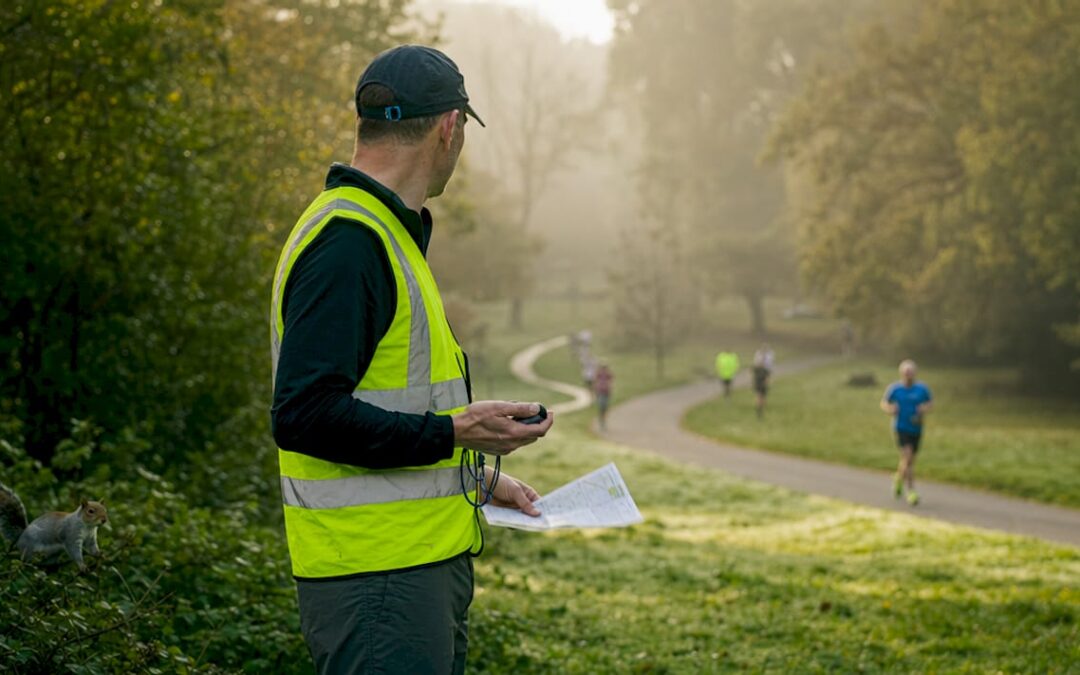
- Running marshals are volunteers responsible for guiding runners, ensuring safety, and supporting event logistics throughout a race course. Their roles vary in scope and complexity but are essential for a safe, smooth, and successful race experience, from local park runs to major marathons. Anyone can become a marshal by attending a briefing, arriving early, and committing to their post, with the role offering valuable community involvement and personal satisfaction.
A running marshal is a volunteer who ensures participant safety, guides runners along the course, and supports event logistics in organised running events. Without marshals, races like the MK Marathon Weekend or parkrun simply could not operate safely. The volunteer backbone of any well-run race, marshals are the people standing at every corner, cheering you on, pointing you in the right direction, and keeping a watchful eye on your wellbeing from start to finish. If you are considering getting involved, this guide covers everything you need to know.
What is the role of running marshals?
Running marshals are defined as volunteer safety and guidance officers positioned at key points along a race course. Their core purpose is to protect participants, maintain course integrity, and act as the human link between race organisers and runners on the ground. The FIA confirms that marshals are first responders ensuring competitions are safe and fair through constant, professional, and accurate support to participants. That principle applies just as much to a 5K fun run in Milton Keynes as it does to a Formula 1 circuit.
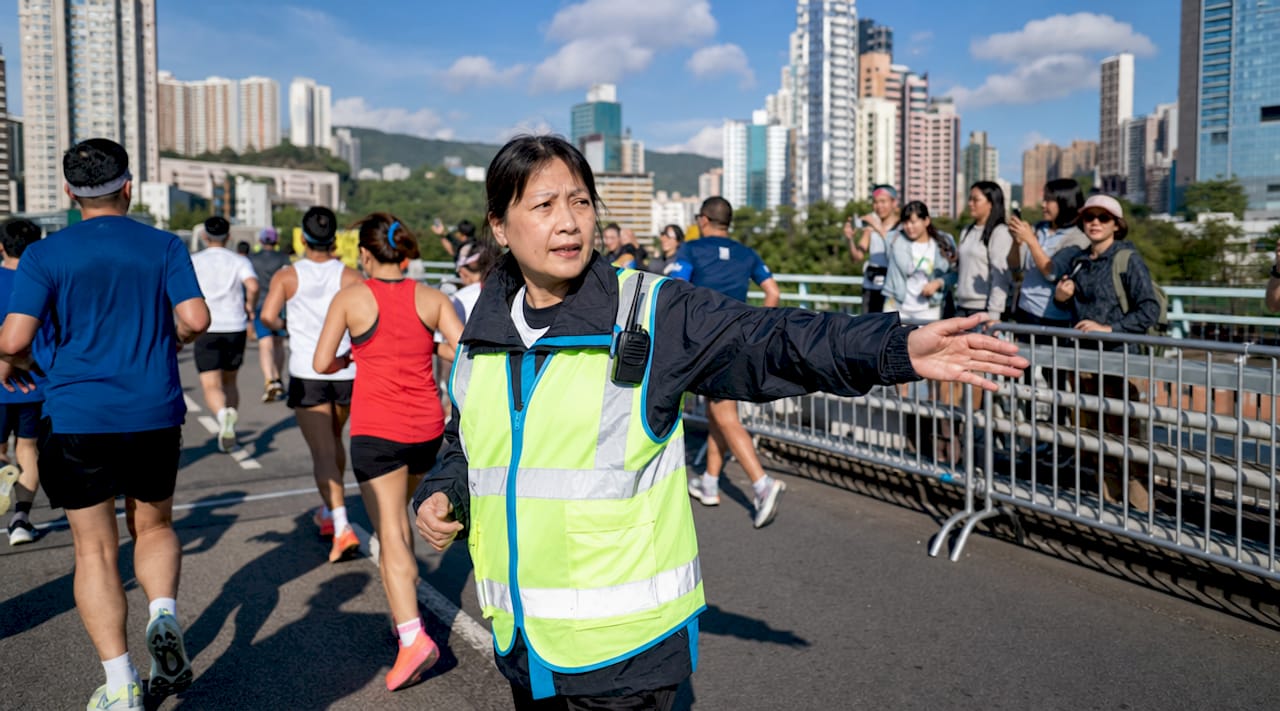
The role spans events of every scale. At parkrun, a marshal might guide 200 runners around a local park. At the MK Marathon Weekend, which attracted 11,000 participants in its record-breaking 2026 event, well-trained marshals directly contributed to that success by reducing race-day incidents and keeping the course flowing. The scale changes, but the responsibility does not.
Marshal roles also vary by event complexity. Straightforward park runs require simple directional guidance, whereas large-scale marathons involve detailed route risk assessments and multi-team coordination. Understanding this spectrum helps you appreciate why the role carries genuine weight, regardless of the event size.
What are the main running marshal duties?
On race day, a marshal’s responsibilities are specific, practical, and time-sensitive. The core running marshal duties include:
- Directing runners at junctions, turns, and course entry points to prevent wrong turns or dangerous crossings
- Warning of hazards such as uneven surfaces, road traffic, or unexpected obstacles along the route
- Managing pedestrian crossings and liaising with traffic management teams at road junctions
- Setting up and checking course signage before the race begins, confirming markers are visible and correctly positioned
- Encouraging runners verbally, particularly those at the back of the field who may be struggling
- Reporting incidents to the Run Director via radio or mobile phone, following agreed communication protocols
- Acting as tail walker support at some events, accompanying the final runner to the finish line
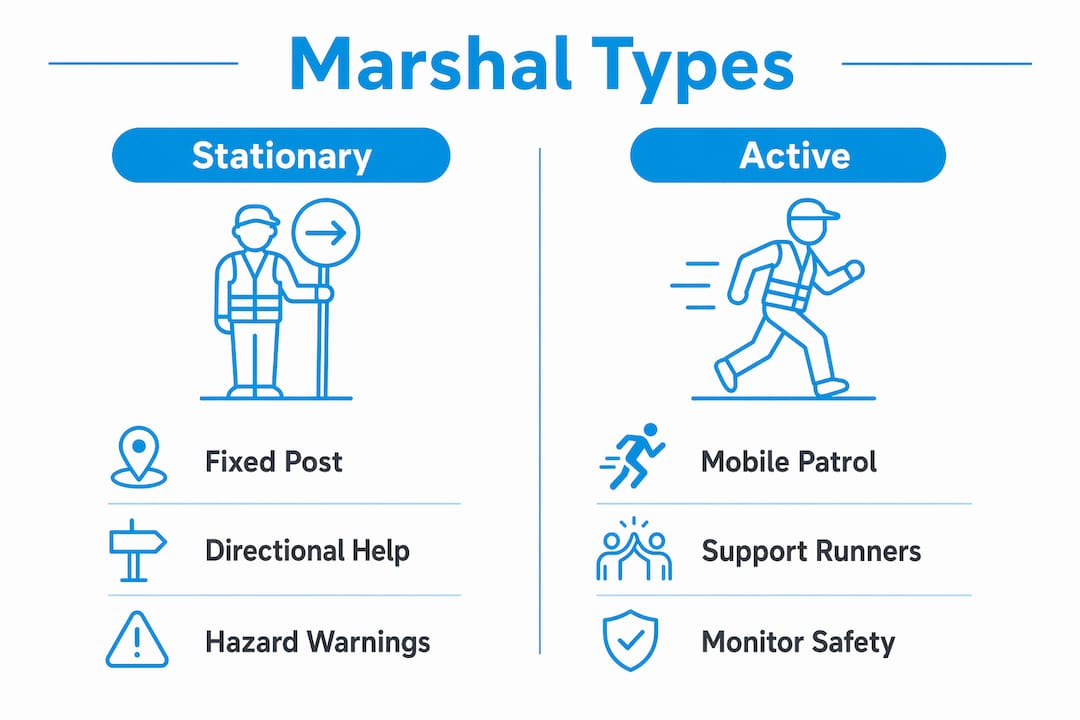
Two distinct marshal types exist: stationary marshals, who hold a fixed position for the duration of the race, and active marshals, who may sweep the course or support tail walkers. Stationary marshals remain at post until the final runner or sweeper passes and do not receive an official race finish time. This is a commitment that requires patience and reliability.
High-visibility vests are standard issue at virtually every event. Marshals wear hi-vis gear for identification and safety, arriving typically 30 minutes before the event start to receive their briefing and take up position. Communication methods range from two-way radios at larger events to simple mobile phone check-ins at smaller community races.
Pro Tip: Always confirm your assigned position with the Run Director before the race begins. Knowing exactly where you are on the course map prevents confusion and means you can relay accurate directions to runners without hesitation.
How do running marshals differ from stewards and security?
Many people use the terms marshal, steward, and security interchangeably, but these are distinct roles with different scopes of responsibility. Understanding where marshals fit within the broader event safety team helps you volunteer with confidence and clarity.
Marshals, stewards, and security each have distinct but complementary responsibilities within event management. The table below summarises the key differences:
| Role | Primary focus | Typical location | Authority level |
|---|---|---|---|
| Running marshal | Course safety, runner guidance, hazard monitoring | Along the race route | Advisory and supportive |
| Steward | Access control, crowd management at fixed points | Entry gates, spectator areas | Operational and directive |
| Security | Rule enforcement, high-risk incident management | Perimeter, sensitive areas | Enforcement and legal |
Marshals focus on wide-area safety coordination and route monitoring. Stewards manage access points and control crowd flow at fixed locations such as start pens or finish areas. Security staff handle enforcement and manage higher-risk scenarios that fall outside the remit of volunteers. You can read more about steward responsibilities in marathons to see how these roles complement each other in practice.
The distinction matters because it shapes your training, your authority, and your interactions with the public. A marshal who tries to enforce rules beyond their remit creates confusion. A marshal who understands their lane, guiding and supporting rather than enforcing, delivers exactly what race organisers need.
Pro Tip: If a situation escalates beyond guidance, such as a runner in medical distress or a confrontation with a spectator, radio the Run Director immediately rather than attempting to manage it alone. Your role is to report and support, not to resolve.
What practical considerations should running marshals know?
Preparation separates a confident marshal from a stressed one. Here is a numbered checklist of practical steps and considerations every marshal should follow before and during an event:
- Arrive early. Volunteers typically arrive 30 minutes before the event start. This gives you time to collect your hi-vis vest, attend the briefing, and locate your assigned position on the course.
- Report to the Run Director. Sign in, confirm your role, and receive any last-minute updates about course changes, weather conditions, or specific hazards.
- Wear your assigned hi-vis gear. Do not substitute your own clothing. The provided vest is your identification to runners, other volunteers, and emergency services.
- Bring personal supplies. Marshals should carry water and weather-appropriate clothing because shifts can involve long periods at a remote post without logistical support. A snack, sunscreen in summer, and a waterproof layer in autumn are sensible additions.
- Stay at your post. Do not leave your position until the tail walker or final runner has passed. Leaving early creates a gap in course coverage that could put a runner at risk.
- Follow communication protocols. If you have a radio, perform a check-in at the start of your shift. Know the procedure for reporting an incident, including what information to give and who to contact.
- Prepare for the physical demands. Marshalling is largely stationary, which means standing in one place for one to three hours. Wear comfortable, supportive footwear and be ready for exposure to the elements regardless of the forecast.
Marshal roles vary significantly by event complexity. A parkrun marshal might stand at a single path junction for 30 minutes. A marshal at the MK Marathon Weekend may cover a road crossing for several hours, coordinating with traffic management teams and supporting hundreds of runners. Both roles matter equally.
How can someone become a running marshal?
Becoming a running marshal is one of the most accessible ways to get involved in your local running community. Marshalling is inclusive and organisers welcome volunteers regardless of physical ability or prior experience, supported by training and a community network that makes the learning curve genuinely manageable.
Here is how to get started:
- Sign up through an official event page. Events like the MK Marathon Weekend publish volunteer opportunities directly on their website. You can register as a course marshal and receive all the information you need ahead of race day.
- Attend the pre-event briefing. Most events provide a short training or briefing session on the morning of the race. This covers your specific duties, communication procedures, and what to do in an emergency.
- Start with a smaller event. If you are new to volunteering, a parkrun is an excellent starting point. The roles are straightforward, the community is welcoming, and you will gain confidence quickly before stepping up to larger events.
- Connect with other volunteers. Marshals represent the community backbone of organised running, forming a mutually supportive network among volunteers and race directors. Many marshals return year after year because of the friendships they build.
- Explore volunteer recruitment resources. Organisations focused on effective volunteer recruitment offer useful frameworks for understanding how marshal programmes are structured and how to make the most of your contribution.
The benefits extend well beyond race day. Volunteering as a marshal builds event management skills, deepens your understanding of race logistics, and connects you with a passionate community of runners and organisers. Many marshals go on to take up running themselves, inspired by the energy they witness from the sidelines. The community benefits of running events are real and tangible for volunteers just as much as for participants.
Key takeaways
Running marshals are the safety and guidance foundation of every organised race, and their effectiveness directly determines whether an event runs smoothly, safely, and joyfully for every participant.
| Point | Details |
|---|---|
| Core marshal purpose | Marshals guide runners, manage hazards, and support race logistics from start to finish. |
| Distinct from stewards | Marshals focus on course safety; stewards manage access points; security handles enforcement. |
| Practical preparation | Arrive 30 minutes early, wear hi-vis gear, bring personal supplies, and stay at your post until the tail walker passes. |
| Inclusive entry point | No prior experience is required; briefings and community support make the role accessible to all. |
| Community impact | Well-trained marshals reduce race-day incidents and contribute directly to record participation success. |
Why marshalling is the best seat in the house
I have stood at more race junctions than I can count, and I will tell you something that surprises most people: the marshal’s position is often more rewarding than crossing the finish line yourself. You see the full spectrum of human effort. You watch the elite runners glide past in the first ten minutes, and then you spend the next two hours cheering on the people who are genuinely battling. Those are the moments that stay with you.
What strikes me most is how underestimated the preparation side of marshalling is. People assume you just show up and wave. The reality is that a good marshal has thought through their position on the course map, knows the radio protocol, and has mentally rehearsed what to do if a runner goes down. That level of readiness is what separates a marshal who adds genuine value from one who is simply present.
My honest advice: do not wait until you feel ready. Sign up, attend the briefing, and trust that the community around you will fill in the gaps. The MK Marathon Weekend marshal team is one of the most welcoming groups I have encountered in running events, and the race-day atmosphere in Milton Keynes is genuinely electric. You will leave wanting to come back.
— Andrew
Join the MK Marathon marshal team in 2026
The MK Marathon Weekend on 3 and 4 May 2026 is one of the UK’s most celebrated running events, and the marshal team is at the heart of everything that makes it special. Whether you are a seasoned volunteer or stepping into the role for the first time, there is a place for you on the course.

Mkmarathon makes it straightforward to get involved. Visit the official MK Marathon volunteering page to see available marshal positions, understand what each role involves, and register your interest. You will receive a full briefing, all the kit you need, and the support of an experienced team around you. Join the force and help make the 2026 MK Marathon the best one yet.
FAQ
What does a running marshal actually do?
A running marshal guides runners along the course, warns of hazards, manages road crossings, and reports incidents to the Run Director. The role is primarily supportive and advisory, focused on keeping participants safe and on course.
Do running marshals need any experience or training?
No prior experience is required to become a running marshal. Most events provide a briefing on the morning of the race covering duties, communication procedures, and emergency protocols, making the role accessible to volunteers of all backgrounds.
How long does a marshal shift typically last?
A marshal shift runs from approximately 30 minutes before the race start until the final runner or tail walker passes. Depending on the event, this can range from one hour at a parkrun to three or more hours at a full marathon.
What is the difference between a marshal and a steward at a running event?
Marshals focus on course safety and runner guidance along the route, while stewards manage access control and crowd flow at fixed points such as start pens and finish areas. The roles are complementary but distinct in scope and location.
How do I sign up to marshal at the MK Marathon Weekend?
You can register directly through the Mkmarathon website. The course marshal sign-up page provides full details on available positions, what to expect on race day, and how to confirm your place on the volunteer team.